Friday, August 30, 2013

Nintendo Reveals The Hideous $130 2DS, Will Cut Wii U Price To $299


Nintendo wants to compete with cheap tablets more than ever, but just not the way you think. The company will release a new version of the 3DS — the Nintendo 2DS, which has a tablet-esque form factor. As the name suggests, it is a 2D-only handheld console compatible with 3DS and DS games. At $129.99, the 2DS is $40 cheaper than its sibling. The company also announced a $50 price cut for the Wii U on September 20, ahead of the releases of the PlayStation 4 and Xbox One.
While the 3DS is doing well, it’s another story for the Wii U. As of June 30, Nintendo reported 3.61 million sales. As a reminder, in July 2007, seven months after the release of the Wii, the company was selling 1.8 million consoles each month. Now, Nintendo wants to compete on price to stay relevant.
But the console still lacks games. Many third-party publishers, such as Electronic Arts, Activision and Ubisoft, will only release their games on the Xbox One and PlayStation 4. The PlayStation 4 will cost $399 and the Xbox One $499.
Nintendo probably thought that launching the Wii U a year before its competitor was the right move to get a head start. But it is hard to convince existing Wii owners that the Wii U isn’t just a tiny upgrade with a tablet-like controller. The name of the console itself doesn’t help. It finally is an HD console from Nintendo, but it’s hard to communicate about the number of pixels on a screen.
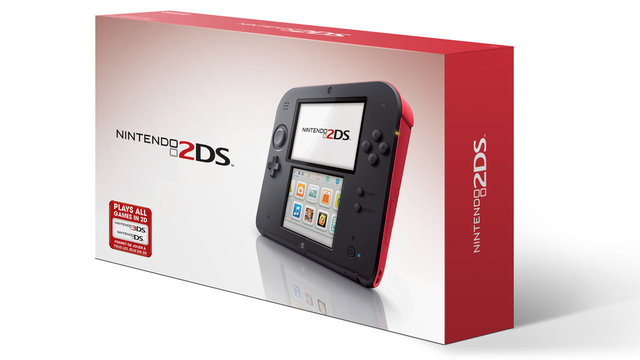
With the 2DS, Nintendo finally built a gaming tablet. It could have a certain appeal to parents who are hesitating between a cheap Android tablet and a Nintendo handheld console, but the form factor doesn’t seem very practical for gamers, and especially children with tiny hands.
Available on October 12, the 2DS will retain the same features as the 3DS, except its main feature — the 3D display. It has the same stylus, Wi-Fi and comes with a 4GB SD card. While $130 is cheap, 3DS games are still more expensive than iOS or Android games. But you won’t find Mario on your iPad.
As Nintendo suggests in the 2DS promo video, the new console is “a handheld gaming system from Nintendo like you’ve never seen before.” Everyone can agree that Nintendo is right on this one.
An earlier version of this article misstated the price of the 3DS. It is $40 more expensive than the 2DS ($169), not $50.
Nintendo 2DS Gameplay

HP EliteBook Revolve 810, ProBook 430 business notebooks launched in India


Hewlett Packard (HP) Printing and Personal Systems Group, India has launched two new business computers, the HP EliteBook Revolve 810 and HP ProBook 430.
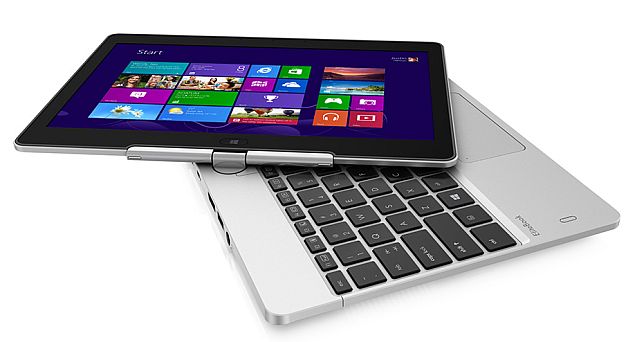
HP EliteBook Revolve 810 is a touch-enabled convertible notebook that transforms into a notebook and a touch-enabled tablet depending on the user's need. The device is powered by third-generation Intel Core processors, giving users an option to choose between an Intel Core i7, Core i5 with Turbo Boost Technology and Core i3 processor.
It offers up to 12GB RAM (DDR3L PC3-12800 SDRAM, 1600 MHz) and up to 256GB solid-state-drive for storage. It also features a microSD card slot. The device comes with Intel HD 4000 Graphics GPU.
The EliteBook features an 11.6-inch diagonal HD LED backlit display with a UWVA (1366x768 pixels) resolution. It features a full-sized, backlit keyboard and an optional Active pen for input.
The device is optimised for Windows 8. It also features a 720p HD camera for video conferencing, dual-microphone array and DTS Studio Sound. The EliteBook Revolve 810 features 2 USB 3.0 ports, an RJ-45 (Ethernet) port, a DisplayPort, a headphone/ microphone combo jack, a side docking connector and a power connector. The device boasts of scratch-resistant Corning Gorilla Glass 2 and has a tough, all-magnesium body. The device also comes with the option of connecting to 3G/ Mobile broadband networks and features secure NFC capabilities.
hp-probook430.jpg
HP ProBook 430, on the other hand, is a business notebook. Made of aluminium, featuring a spill-resistant keyboard and a soft-touch paint job, the notebook is powered by fourth-generation Intel Dual-core i7, Core i5 and i3 processors. It offers up to 16GB of RAM and comes with the option of a 500GB hard disk, a 120GB solid state drive or a 128GB solid state drive. It comes with Intel HD Graphics 4400 or 5000 integrated GPU, depending on the processor.
The notebook features a 13.3-inch diagonal HD LED-backlit anti-glare display with a resolution of 1366x768 pixels.
It also features a 720p HD camera for video conferencing, dual-microphone array and DTS Studio Sound.
The notebook sports 2 USB 3.0 ports, a USB 2.0 port (power port), an HDMI 1.4a port, a VGA port, a stereo microphone input, a headphone/ line out, an RJ- 45 (Ethernet), and a power connector port.
Commenting on the launches, Sunish Raghavan, Head- Commercial PC Category, PPS, HP India said, "Professionals today demand zero-compromise productivity and extreme mobility in a computer, and HP offers the best solution with EliteBook Revolve and ProBook 430. As a sleek and lightweight notebook that also converts to a tablet, the HP EliteBook 810 is designed to revolve around a busy executive's life, and comes with elegant touch computing, enterprise-grade security and military-grade durability."
The HP EliteBook Revolve 810 is priced at Rs. 90,000 while the HP ProBook 430 is priced at Rs. 39,000.

Thursday, August 29, 2013

Huawei Honor 3 with 13-megapixel camera officially launched


Chinese handset manufacturer, Huawei has launched the third iteration of its Honor smartphone dubbed as Honor 3. It's also known as the Glory 3 in some markets.
The Huawei Honor 3 features a 4.7-inch HD display. The device is powered by a 1.5GHz quad-core K3V2 processor paired with 2GB of RAM. The device runs on Android 4.2.2 Jelly Bean with Huawei's 

Emotion UI 1.6 on top. It packs 8 GB of internal storage that can be expanded with the help of a micro SD card.
The Honor 3 sports a 13.1-megapixel Exmor RS rear camera accompanied by an LED flash and a 1-megapixel front camera. The latest smartphone from Huawei is reportedly water and dust resistant with IP55 or IP57 certification. The Huawei Honor 3 also comes with an infrared transmitter that enables it to work with more than 3,000 models of appliances including television, set-top box, IPTV and AC, as a remote control, as per the company. The device is backed by a 2230mAh battery.
Presently, the Huawei Honor 3 has been launched in the Chinese market and is priced at 1,888 Yuan(Rs. 20,855 approximately). The device was first spotted by a Chinese website, Mydrivers.
However, there is no word on the possible pricing and availability of the newly launched Honor 3 for other markets.
Earlier, the Huawei Ascend P1 went up for pre-orders in India for Rs. 12,990. The phone was first showcased at CES 2012 and was rolled out almost after a year and a half in the Indian market.
Huawei Ascend P1 is powered by a 1.5GHz dual-core Qualcomm Snapdragon S4 processor alongside 1GB RAM. It comes with 4.3-inch Super AMOLED qHD(540x960 pixels) display with Gorilla Glass 2, 4GB internal storage (expandable up to 32GB), 8-megapixel rear camera with dual LED flash and a 1.3-megapixel front facing camera. The Huawei Ascend P1 runs the dated Android 4.0 operating system and is powered by a 1670mAh battery. 

Huawei Honor 3 key specifications
  • 4.7-inch HD display
  • 1.5GHz quad-core K3V2 processor
  • 2GB RAM
  • 8GB internal storage
  • 13.1-megapixel Exmor RS rear camera
  • 1-megapixel front facing camera
  • Android 4.2.2 Jelly Bean
  • 2230mAh

Samsung Galaxy Note III release pegged for September 27


With Samsung's supposed September 4 Galaxy Note III unveiling event just a week away, now we hear rumors about the expected release dates for the device in various markets.
A new report claims that the Galaxy Note III will reportedly go on sale on September 27 in the Taiwanese market, while the device will be up for pre-orders from September 16.
The news comes from the Taiwanese site ePrice which cites its sources and claims that the dates of pre-orders and launch may be changed; however the site does not expect major changes in the roll out of the device in Taiwan.
Earlier, a Samsung official had confirmed that the company will be unveiling the next-generation Galaxy Note device and the long-rumored Galaxy Gear smart watch on September 4. There have been reports that suggested that the South Korean major may start shipping the Galaxy Note III in September itself. An earlier report had indicated the likely shipping date of the latest Note device to be from week 36, which is from September 2 to September 8.
Recently, a new set of leaked images of the alleged Galaxy Note III screen surfaced online, that suggested that the next Galaxy Note device will feature a 5.68-inch display.
Other rumored specifications include a full-HD Super AMOLED display with a resolution of 1080 x 1920 pixels, quad-core Snapdragon 800/ Exynos octa-core processor with 3 GB of RAM. The internal storage capacity is expected to start from 32 GB, instead of 16 GB as has been the norm with flagship devices. It is also said to sport a 13-megapixel rear camera, a 3,200 mAh battery, and run Android 4.3 Jelly Bean.

LOST PLANET 3


Lost Planet 3 is a third-person shooter video game developed by Spark Unlimited and published by Capcom for Microsoft Windows, PlayStation 3 and Xbox 360. The game is the prequel to Lost Planet: Extreme Condition and Lost Planet 2 and takes place on the same planet of E.D.N. III. The game will take a more story-driven narrative approach to the campaign similar to the first game. Unlike previous games in the series, which were developed internally by Capcom, the game will be developed externally by Spark Unlimited with Matt Sophos serving as game director, though series creator, Kenji Oguro, is still attached as franchise creative director. This follows a recent trend of Capcom games being developed by Western developers rather than internally, such as DmC: Devil May Cry.
In the first game, NEVEC had become a dictatorial force on E.D.N. III having defeated the Akrid and only being left with defeating the Snow Pirates who were rebelling against their governance. However, in the game NEVEC has not yet become an antagonist and instead is helping make the planet habitable to humans by constructing thermal posts on the planet to combat the harsh icy weather conditions. Though as the story progresses Jim begins to unravel the dark secrets of NEVEC.
The Akrid, an enemy that has been present through the entire series, is suggested to be one of the enemy types faced by the main character. This was shown in a leaked trailer for the game.
Lost Planet 3 reveals new truths about the foreboding planet and the colonial history of E.D.N. III, returning players to the extreme and unpredictable conditions that characterized the Lost Planet series, now harsher than ever before. The game delivers a diverse range of gameplay including on-foot battles and intense first person action. With a number of multiplayer modes and a compelling single player experience, Lost Planet 3 will delved into the hidden truths within the unique and dynamic environment of E.D.N. III.
Lost Planet 3 introduces Jim, a rig pilot who leaves Earth to take on a hazardous but lucrative contract on E.D.N. III working for Neo-Venus Construction (NEVEC.) NEVEC's existing Thermal Energy reserve is running low, and the fate of the Coronis mission depends on the natural source of the energy supply being located. Realizing the opportunity for a huge pay-off and early ticket home, Jim braves the risk of the treacherous environment and threat of the indigenous Akrid. Acting as a home away from home and boasting an array of tools that can assist Jim on the field, the utility rig provides Jim's safety and is essential for not only his contract work but also his protection against the ever-changing climate.
The game's gameplay will be more similar to the first game with a story-driven adventure rather than the second game which replaced the story-driven narrative with a simple co-op and grind-heavy campaign. Using the game's mission-based mechanics, players can choose to take on core quests that progress the story, or side-quests to help out fellow colonists on the planet. The game will allow players to openly explore areas in a style similar to role-playing games with the ability to talk to non-player characters, obtain side-quests, upgrade equipment and build their own bipedal rigs using items gathered throughout the campaign. Thermal energy will no longer be tied to the characters life support, and instead will primarily be used as a form of currency, giving the player more freedom to explore E.D.N. III. Once again, the antagonists of the game will be the Akrid, "aliens" indigenous to the planet of E.D.N. III.

Lost Planet 3 Minimum System Requirements

OS: Windows XP
CPU: Intel Pentium Dual Core E6400 2.13GHz or AMD Athlon X2 Dual Core 5600+
RAM: 3GB System Memory
GPU: GeForce 9800 GT or ATI Radeon HD 4770
DX: DirectX 9.0c
HDD: 16GB Free Hard Drive

Lost Planet 3 Recommended System Requirements

OS: Windows 7 64bit
CPU: Intel Core 2 Quad Q6700 2.66GHz or AMD Athlon II X4 630
RAM: 8GB System Memory
GPU: GeForce GTX 460 or ATI Radeon HD 6850
DX: DirectX 9.0c

Well, those recommended requirements aren't messing around, asking for a hefty 8GB of RAM as well as a potent quad core. The minimums are also fairly high, but with the 9800 GT not being much better than the 8800, they aren't too bad.

Ouya review


The ongoing explosion in independently developed, low-budget video games has been a boon for players who travel. Whether I'm on the road with an iPad, an Android smartphone or a laptop, I know there's a huge library of games to play.

When I get home, though, I want to play on a bigger screen. That's where the Ouya comes in. It promises to deliver the best in inexpensive indie gaming on a high-resolution screen, through a small device that runs the Android operating system designed for phones and tablets.

Ouya costs just $100, a few hundred dollars less than what you'd pay for a major game console. Thousands of gamers and game developers got Ouyas over the past few months after contributing at least $95 to Ouya's creators through the group-fundraising site Kickstarter. The device went on sale more broadly on Tuesday.

Ouya runs Google's Android system and is built around Nvidia's Tegra 3 processor, used mostly in smartphones and other mobile devices. That should make it easy to port over the thousands of games already made for Android phones and tablets, but for now you're limited to software specifically designed for Ouya. Nearly 180 games are available so far through Ouya's online store, with many more expected.

Each game has a version you can download for free. If you like what you see, you can download a full version for a few bucks. By contrast, games for one of the big three consoles can cost as much as $60 each - usually with no free trial.

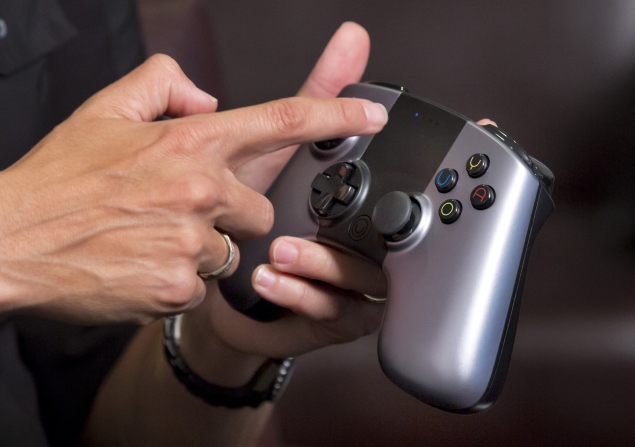
The device itself is a cube measuring 3 inches on each side, with slightly rounded corners on the bottom. The controller is a bit chunkier. It resembles what's available with Microsoft's Xbox and Sony's PlayStation, with two exceptions: The Ouya controller has a touchpad in the middle (although none of the games I sampled took advantage of it), and its grips are longer, each accommodating an AA battery. One controller comes with the Ouya, and extra ones cost $50 each.

Setup is easy once you connect the Ouya to your high-definition television set using a supplied HDMI cable. When you turn on the console, it automatically searches for Wi-Fi connections. You can also connect to the Internet through an Ethernet cable, which you have to provide yourself. Once connected, you need to create an account and supply credit card information.

Then you're taken to a simple menu with four options: play, discover, make and manage. "Make" takes you to an area for potential game developers, while "manage" lets you tinker with system settings.

ouya_ceo-635.jpg

"Discover" takes you to Ouya's game store. You can find games by genre, such as role-playing, sim/strategy and "meditative." You can also check out showcases such as "couch gaming with friends."

Download speeds aren't bad; it took about 20 minutes for me to transfer a 725-megabyte file over Comcast high-speed Internet. Smaller games are, of course, much faster. The device has 8 gigabytes of internal storage, and you can add more by connecting an external hard drive to the Ouya with a USB cable.

Once you have your game, clicking "play" on the home page takes you to your personal library. Compared with the sometimes daunting menus on the Microsoft's Xbox 360 and Sony's PlayStation 3, Ouya's displays are clean and elegant.

The offerings on the Ouya store vary wildly in quality and ambition. Android is an open platform, so anyone can write software for it. That means you have professionally executed games such as the beloved "You Don't Know Jack" competing head-to-head with the sloppy trivia game "Quizania." Some popular console games, including "The Bard's Tale" and "Final Fantasy III," have been adapted for the Ouya, but it isn't the place for blockbuster titles such as the latest "Call of Duty" and "Grand Theft Auto."

More prevalent are games that have been cult hits on PCs and smartphones, including "Canabalt," "Saturday Morning RPG" and "Organ Trail." There are a few Ouya exclusives, including the 3-D puzzler "Polarity" and the multiplayer archery game "TowerFall."

Ouya offers high-resolution displays in 1080p, comparable to the PlayStation 3, Xbox 360 and Nintendo's Wii U. Most of the Ouya's offerings are fairly low-def, though, and if you're looking for the wide-screen majesty of "The Elder Scrolls V: Skyrim" or "BioShock Infinite," you won't find it here. If your video-game habit dates back to the 1970s, you'll notice a distinct retro feel to the Ouya's library. That's not a complaint; there's something refreshing about taking on a simple running-and-jumping game such as "Canabalt" after you've survived a grueling epic like Sony's PS3 hit "The Last of Us."

Indeed, some of the more satisfying indie releases of the last few years - say, "Fez," "Hotline Miami" or "Monaco: What's Yours Is Mine" - have combined old-school graphics with game play that's more sophisticated than most big-budget console releases offer. Nothing currently on Ouya matches the quality of those games, but if the system can attract that level of talent, it will be a console to be reckoned with. If you're a hardcore gamer, it won't replace your Xbox or PlayStation, but for $100 it's a worthy supplement.
The ongoing explosion in independently developed, low-budget video games has been a boon for players who travel. Whether I'm on the road with an iPad, an Android smartphone or a laptop, I know there's a huge library of games to play.

When I get home, though, I want to play on a bigger screen. That's where the Ouya comes in. It promises to deliver the best in inexpensive indie gaming on a high-resolution screen, through a small device that runs the Android operating system designed for phones and tablets.

Ouya costs just $100, a few hundred dollars less than what you'd pay for a major game console. Thousands of gamers and game developers got Ouyas over the past few months after contributing at least $95 to Ouya's creators through the group-fundraising site Kickstarter. The device went on sale more broadly on Tuesday.

Ouya runs Google's Android system and is built around Nvidia's Tegra 3 processor, used mostly in smartphones and other mobile devices. That should make it easy to port over the thousands of games already made for Android phones and tablets, but for now you're limited to software specifically designed for Ouya. Nearly 180 games are available so far through Ouya's online store, with many more expected.

Each game has a version you can download for free. If you like what you see, you can download a full version for a few bucks. By contrast, games for one of the big three consoles can cost as much as $60 each - usually with no free trial.

The device itself is a cube measuring 3 inches on each side, with slightly rounded corners on the bottom. The controller is a bit chunkier. It resembles what's available with Microsoft's Xbox and Sony's PlayStation, with two exceptions: The Ouya controller has a touchpad in the middle (although none of the games I sampled took advantage of it), and its grips are longer, each accommodating an AA battery. One controller comes with the Ouya, and extra ones cost $50 each.

Setup is easy once you connect the Ouya to your high-definition television set using a supplied HDMI cable. When you turn on the console, it automatically searches for Wi-Fi connections. You can also connect to the Internet through an Ethernet cable, which you have to provide yourself. Once connected, you need to create an account and supply credit card information.

Then you're taken to a simple menu with four options: play, discover, make and manage. "Make" takes you to an area for potential game developers, while "manage" lets you tinker with system settings.

"Discover" takes you to Ouya's game store. You can find games by genre, such as role-playing, sim/strategy and "meditative." You can also check out showcases such as "couch gaming with friends."

Download speeds aren't bad; it took about 20 minutes for me to transfer a 725-megabyte file over Comcast high-speed Internet. Smaller games are, of course, much faster. The device has 8 gigabytes of internal storage, and you can add more by connecting an external hard drive to the Ouya with a USB cable.

Once you have your game, clicking "play" on the home page takes you to your personal library. Compared with the sometimes daunting menus on the Microsoft's Xbox 360 and Sony's PlayStation 3, Ouya's displays are clean and elegant.

The offerings on the Ouya store vary wildly in quality and ambition. Android is an open platform, so anyone can write software for it. That means you have professionally executed games such as the beloved "You Don't Know Jack" competing head-to-head with the sloppy trivia game "Quizania." Some popular console games, including "The Bard's Tale" and "Final Fantasy III," have been adapted for the Ouya, but it isn't the place for blockbuster titles such as the latest "Call of Duty" and "Grand Theft Auto."

More prevalent are games that have been cult hits on PCs and smartphones, including "Canabalt," "Saturday Morning RPG" and "Organ Trail." There are a few Ouya exclusives, including the 3-D puzzler "Polarity" and the multiplayer archery game "TowerFall."

Ouya offers high-resolution displays in 1080p, comparable to the PlayStation 3, Xbox 360 and Nintendo's Wii U. Most of the Ouya's offerings are fairly low-def, though, and if you're looking for the wide-screen majesty of "The Elder Scrolls V: Skyrim" or "BioShock Infinite," you won't find it here. If your video-game habit dates back to the 1970s, you'll notice a distinct retro feel to the Ouya's library. That's not a complaint; there's something refreshing about taking on a simple running-and-jumping game such as "Canabalt" after you've survived a grueling epic like Sony's PS3 hit "The Last of Us."

Indeed, some of the more satisfying indie releases of the last few years - say, "Fez," "Hotline Miami" or "Monaco: What's Yours Is Mine" - have combined old-school graphics with game play that's more sophisticated than most big-budget console releases offer. Nothing currently on Ouya matches the quality of those games, but if the system can attract that level of talent, it will be a console to be reckoned with. If you're a hardcore gamer, it won't replace your Xbox or PlayStation, but for $100 it's a worthy supplement.

ouya_ceo-635.jpg

iPhone 5C and iPhone 5S: More evidence suggests September 20 release date


More evidence pointing to September 20 as the iPhone(s)' release date has emerged online.
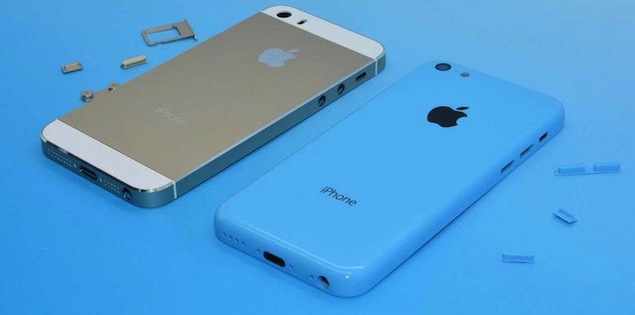
The low-cost iPhone or iPhone 5C has leaked several times. Alleged pictures of the iPhone 5C have revealed a plastic polycarbonate body back panel in White, Blue, Red, Yellow and Green colours, a round camera lens and LED flash, Apple logo and iPhone branding. It's expected to be powered by a dual-core CPU, and have a 4-inch screen, just like the iPhone 5, with a resolution of 640x1136 pixels. The iPhone 5C is rumoured to have 1GB of RAM, and come in 16GB, 32GB and 64GB storage variants. It'a also likely to sport an 8-megapixel rear camera and a 1.2-megapixel front facing camera camera and run iOS 7 complete with Siri which would be available in English, French, German, Japanese, Chinese, Korean, Italian and Spanish.
 

According to Tmo News, which calls itself the unofficial T-Mobile blog, T-Mobile is planning to schedule employee blackout between September 20 and September 22. This essentially means that T-Mobile employees will not be able to take a leave for the purpose of a vacation during this period. While it's not directly related to the iPhone's release, carriers do institute blackout periods for busy days which also includes days just immediately after the release of a new iPhone.
If one connects the dots, Nikkei, the Japanese business publication had earlier suggested that Apple would release the iPhone 5S and the low cost iPhone or iPhone 5C on September 20 in Japan, indicating that the first wave of the new iPhone's release would commence on the same day. Greece-based website, Techmaniacs had also confirmed that the iPhone 5S and the iPhone 5C would launch on September 20
A number of rumours including some by credible publications and journalists have confirmed September 10 as the most probable date for Apple hosting a special event to announce the new iPhone(s).
The iPhone is usually made available to the public in major markets including US, Canada, France, Japan, Hong Kong, UK, and Singapore, around a week after the official announcement.
Apple has not sent any invitations or announced an event officially, yet, though it typically sends out official invitations only a week before the actual event.


The iPhone 5S is expected to come with a brand new Apple chip, the A7, alongside 1GB of LPDDR3 RAM, retaining the form factor of the iPhone 5. A 128GB storage variant of the phone has also been rumoured. The iPhone 5S is likely to come with a larger f2.0 aperture compared to the iPhone 5, that comes with f2.4 aperture. It's also likely to sport a fingerprint reader.